Acoustic Ceilings

The ceiling is the biggest surface in most rooms, and the one most often left bare
Tiles, baffles or rafts: ceiling height decides, not taste
Existing services shape the format as much as the acoustics do
Area treated matters more than the product, so we size it to the room's volume
Acoustic Ceilings
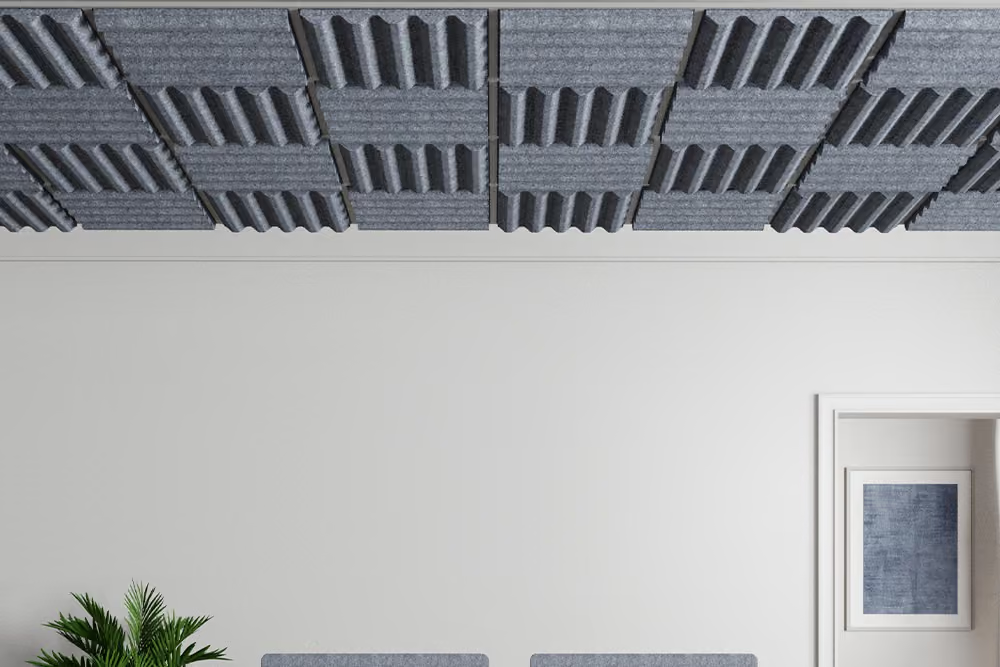
Ceiling treatment covers more of a room's surface area than any wall panel, which is why it is usually the first fix in large or high-ceilinged spaces. As flush tiles, suspended baffles or floating rafts, it intercepts sound before it reflects back down into the room.
The right format depends on ceiling height, existing services and how much of the ceiling is available to treat. We recommend the format for your room during a free survey, then supply and install across the UK.
Sound absorption
Ceilings cover more surface area than any wall panel.
Design flexibility
Format chosen for ceiling height, services and available area.
Acoustic Ceilings
Explore more acoustic products
From first survey to final finish
Seven stages, one point of contact. Book a free survey or call +44 1908 880191, and we'll come back to you with the next step.

An acoustician visits the site, or works from your drawings and photos when a visit isn't practical. Either way, the room, its surfaces and how it is used are recorded before any advice is given.

Reverberation, ambient noise and noise transfer are read against what the space is used for. The findings arrive as an AI-assisted acoustic report with recommendations, yours to keep with no obligation to proceed.

Treatment is modelled against a reverberation target, then drawn up with panel positions, fixings and finishes. Nothing moves forward until you have approved the design.

Every quotation comes with the specification behind it, listing products by type, quantity and finish with costs set out line by line. What is quoted is what the design calls for.

Panels, baffles, ceilings and screens come from the manufacturers we work with and are supplied to the approved specification. What arrives on site matches what was designed.

Our installation team fits to the approved drawings, checking positions and fixings as they go. One team supplies and installs the treatment.

Optional paid add-on: after fit-out the space can be measured again and compared with the original survey, so the improvement is measured rather than assumed. Compliance testing is carried out with our testing partner, EMC Acoustics, and the written record goes into your building file.
Trusted on schools, venues and landmark halls








Specification, performance and installation
Your product questions, answered.
It depends on ceiling height, existing services and how much of the ceiling is exposed. Tiles suit low ceilings with a grid, baffles suit tall open rooms, and rafts suit large rooms with limited wall space. We recommend the right format for your room in a free survey.
It should not, if it is designed properly. Baffles and rafts hang clear of the deck, and tiles are specified around existing fittings. We check sprinkler, detector and air terminal coverage against the layout, and confirm the result against the fire strategy.
Often not on its own. A treated ceiling controls most reverberation, but hard parallel walls can still cause flutter echo, and speech privacy between desks needs screens or masking. Ceilings usually work best combined with some wall treatment.
It depends on the size of the room and the format. Most ceiling treatments can be fitted without shutting the building, with out-of-hours or phased work for occupied spaces. We give a programme after the survey rather than quoting a standard duration.
For heavier formats such as rafts, yes. We check the deck's load capacity and fixing points at the survey, especially in older buildings. Light tiles in an existing grid need the grid's condition and capacity checked instead.
Too noisy? Let's talk silence.
Book a FREE site survey, and an acoustician will tell you exactly what your space needs. Rather talk first? Call +44 1908 880191.