Auditoriums & Theatres
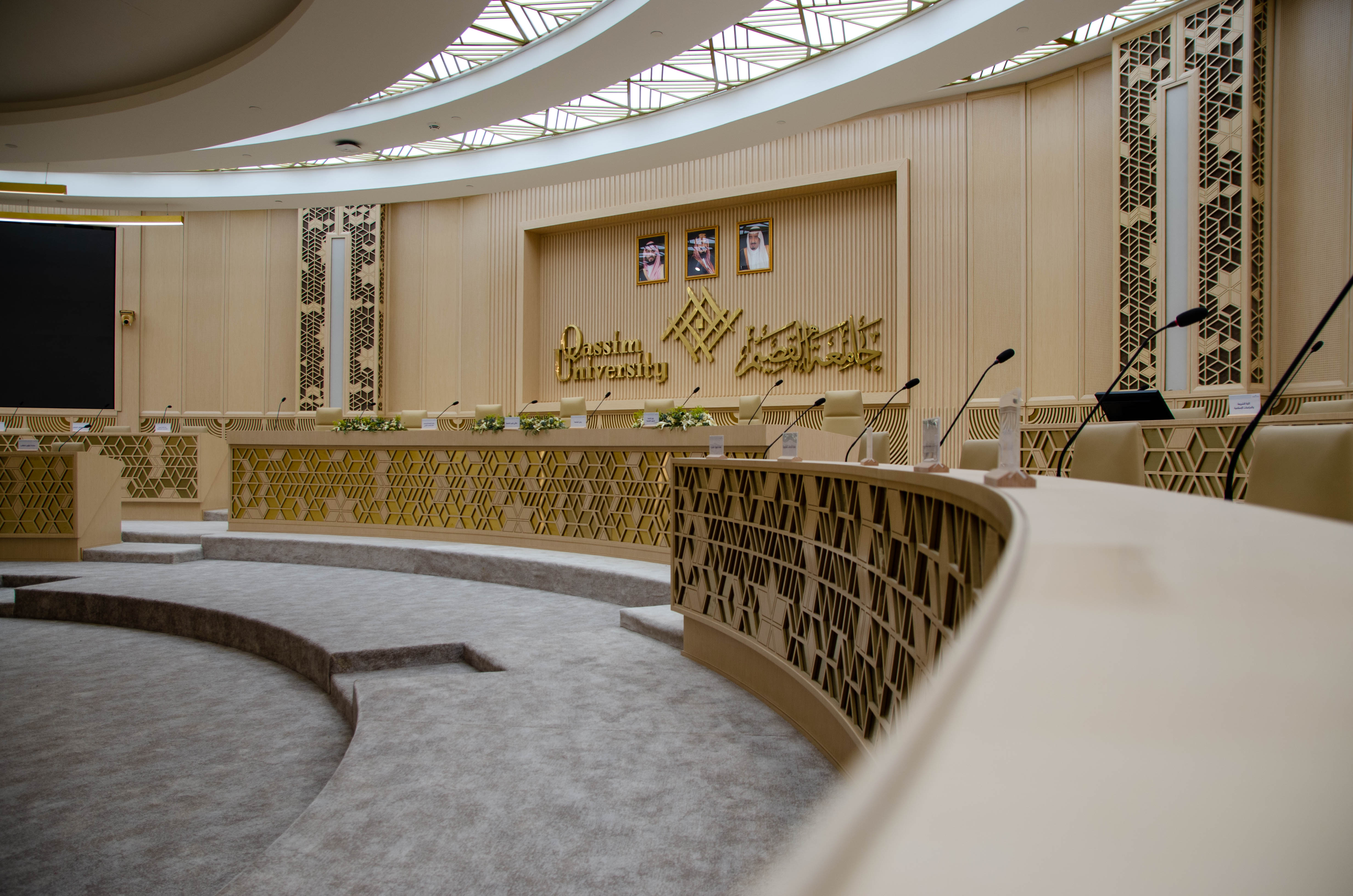

Speech reaches every seat clearly, not just the front rows

Reverberation tuned to how the space is actually programmed

Audiences with hearing loss follow performances more easily

Meets BB93 targets for school halls and drama studios
Auditoriums need acoustic design for their actual use
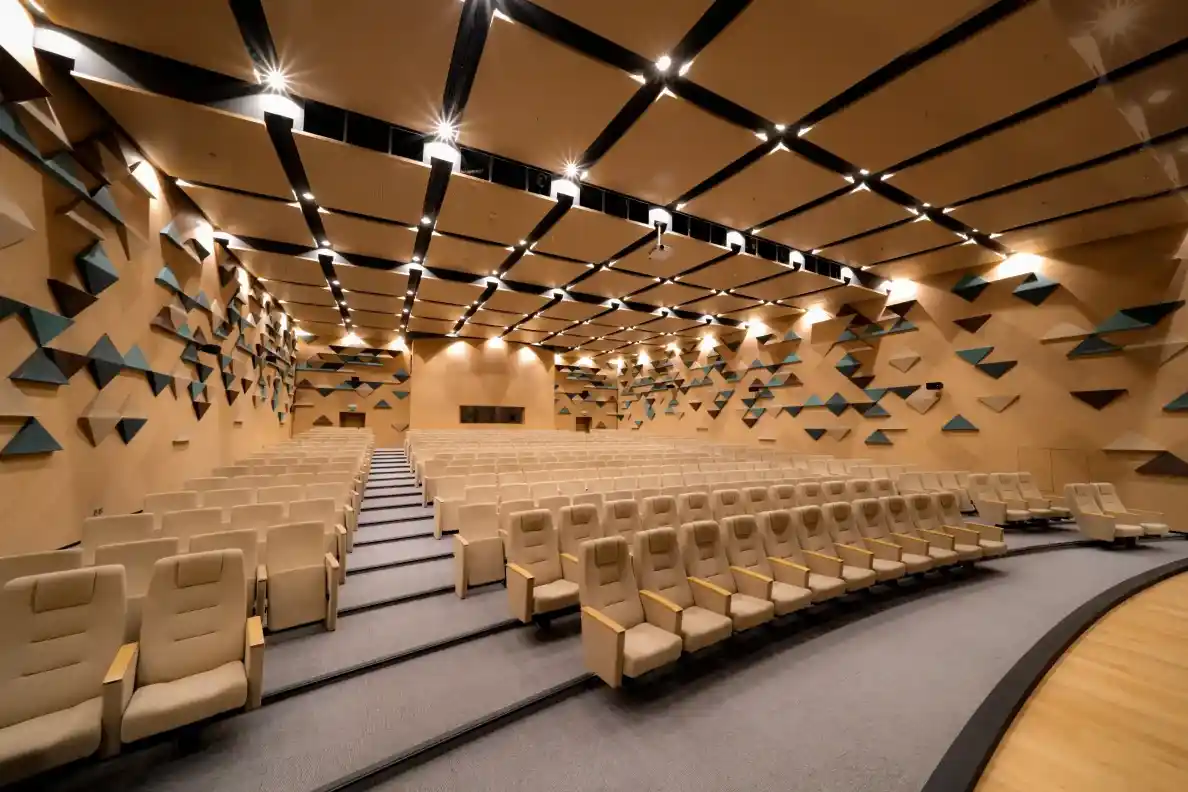
The right treatment fixes this by design, not by accident. Reverberation is tuned to how the space is actually programmed — speech, music, or both — so ceiling rafts and sculptural panels do the acoustic work while becoming part of the architecture, not a compromise bolted on afterwards.
An auditorium built for music will swallow a spoken-word production, and one built for speech will leave a live band sounding flat and lifeless — the reverberation time that flatters one use actively works against the other. Get the design wrong and no amount of amplification fixes it; the room itself is fighting the performance.
Custom acoustic solutions for
Auditoriums & Theatres

Sound reasons for Acoustic

One contractor, start to finish
Survey, design and installation handled by our own team, and testing carried out with our testing partner, EMC Acoustics. One team stays accountable for the result, from the first site visit to the final sign-off.

Designed to a target
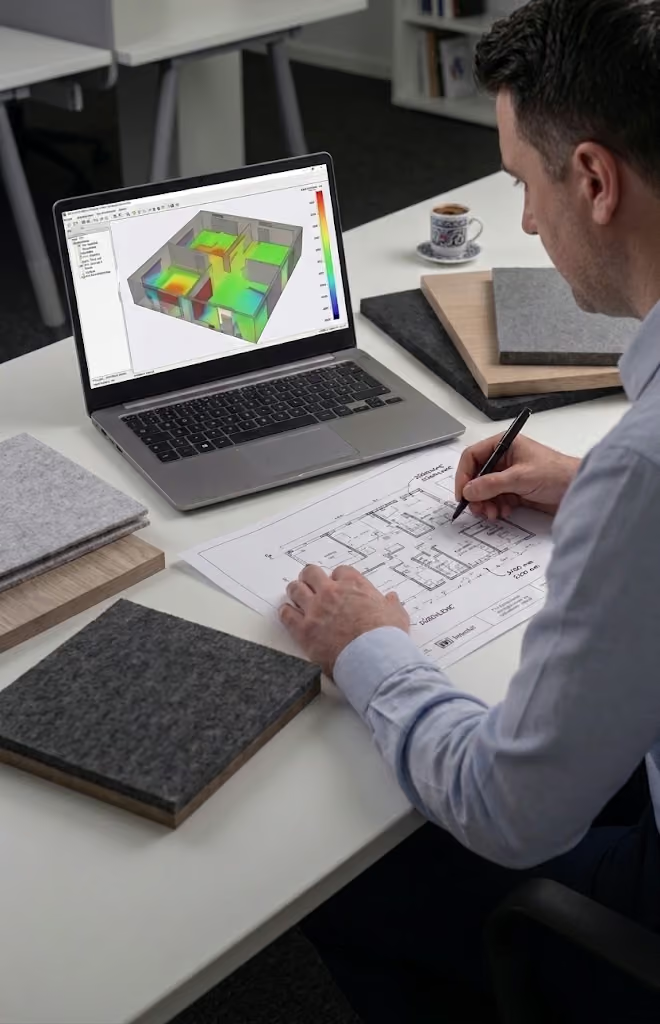
Every space gets an acoustic design modelled to a specific reverberation target, not a standard panel layout. Before-and-after acoustic measurement is available as a paid add-on, so the improvement can be proven, not just felt.

Designed for your actual use, not a generic target
Speech and music need different acoustics, and a hall tuned for one can compromise the other. We design reverberation around how your auditorium is actually programmed, from lectures and assemblies to concerts, so audiences, including people with hearing loss, can follow speech from every seat.

Independent on materials
We source from several manufacturers and are tied to none, so we specify what your space and budget actually need, not what one catalogue stocks.
What We Offer
Auditoriums & Theatres
Not sure what this space needs? Call us on +44 1908 880191 or book a free survey, and we'll come back to you with the next step.

We assess the hall, its finishes and its seating, design treatment that accounts for how much sound the audience and the empty seats absorb, and specify panels so the room behaves more consistently from rehearsal to a full house. Our installation team fits the scheme around your performance schedule.

A free site survey. An acoustician assesses the space and how it is used, and you receive a quotation and an AI-assisted acoustic report, with no obligation to go ahead.
Product placement, specifications and drawings your contractor can work from, designed around how the space is used. Free design on qualifying projects.

Send us drawings and photographs and we'll prepare an acoustic proposal with product recommendations and a quotation for supply and installation, free of charge.
Before-and-after acoustic measurement and compliance testing, carried out with our testing partner EMC Acoustics. This is a paid service, available on any project.
Trusted on schools, venues and landmark halls








How we reduce the noise
We specify ceiling rafts and sculptural wall panels positioned and angled to control reverberation for your actual use — spoken word, live music, or both — rather than applying a single generic treatment.
One team surveys, designs and installs — nothing gets lost between contractors
Every install is checked against the target spec before we call it done
Not tied to one manufacturer, so the product is chosen for your space, not our stock
Standards, finishes and installation
Your questions about this space, answered.
There is no single figure. Speech needs a shorter, more controlled reverberation time for clarity, while live music often benefits from a longer one for richness. A room used for both is designed around its main use, sometimes with adjustable elements, so we set the target from your actual programme.
Yes. Ceiling rafts and sculptural or timber-faced panels can be designed as visible features of the room, positioned where the acoustics need them. Treatment that is planned with the architecture reads as part of the building rather than added equipment.
Yes. Custom acoustic engineering is standard for auditorium geometry, because raked seating and curved walls change how sound travels. We work from your drawings and model the room, so treatment follows the shape instead of being forced onto it.
We plan treatment alongside sound reinforcement, rigging and stage equipment at design stage, so panels, rafts and speakers do not clash. Coordinating early avoids re-positioning loudspeakers or treatment once both are on site.
As a paid add-on, we can measure the finished room's reverberation time against the target and compare it with the survey baseline. You get the results in writing, so the outcome is evidenced rather than judged by ear alone.
Too noisy? Let's talk silence.
Book a FREE site survey, and an acoustician will tell you exactly what your space needs. Rather talk first? Call +44 1908 880191.