
Flutter Echo and Room Geometry: How Shape Affects Acoustics
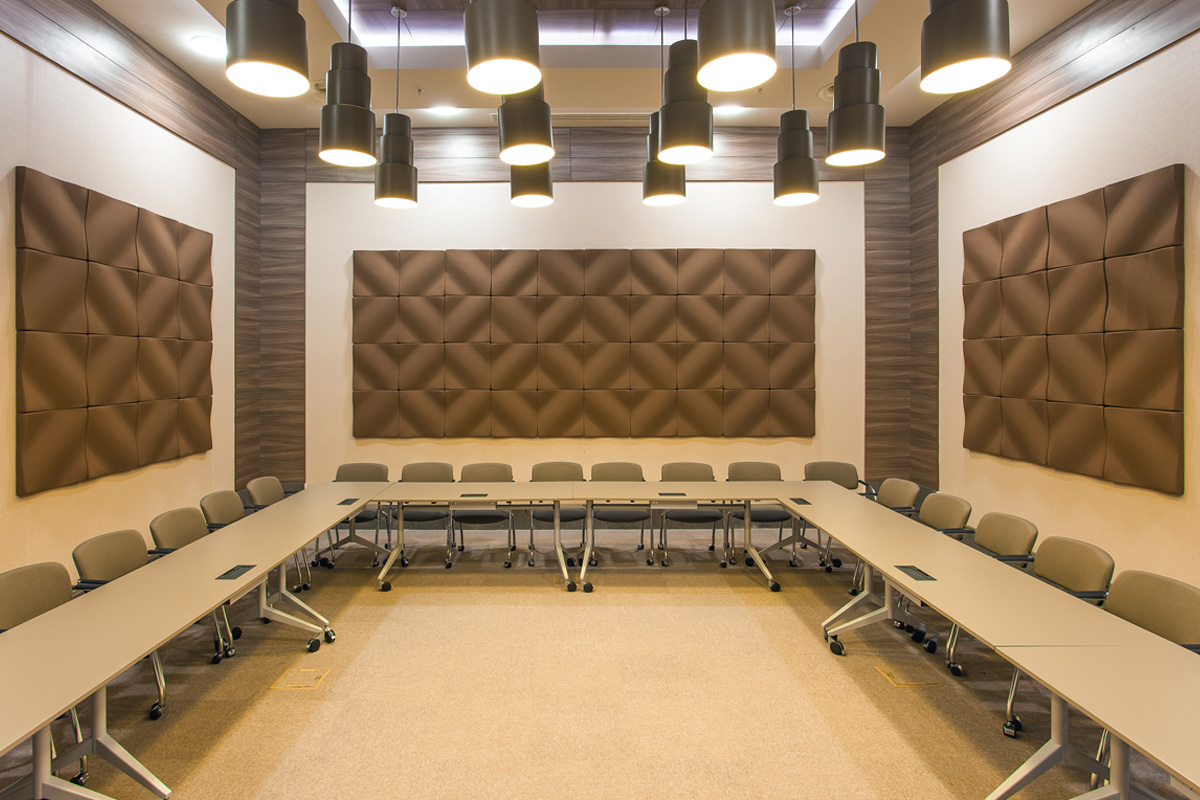

Clap once in an empty room with bare parallel walls and you might hear it, a short, rapid, buzzing repeat rather than a single clean sound. That's flutter echo, and it's a specific geometric problem, not just "too much reverberation," which is why generic acoustic treatment sometimes fails to fix it even when the room's overall RT60 looks acceptable on paper.
What causes it, specifically
Flutter echo happens when sound reflects rapidly back and forth between two parallel, hard, reflective surfaces, most commonly opposing bare walls, but also floor-to-ceiling in rooms with hard finishes on both. Each reflection loses relatively little energy against a hard surface like glass, concrete or plasterboard, so the sound bounces multiple times in quick succession before it decays enough to become inaudible, producing that distinctive rapid, metallic buzz rather than a smooth, single decay.
Why it's a geometry problem, not just an absorption problem
A room can have a perfectly reasonable overall RT60 figure, enough total absorption spread across enough surface area, and still have flutter echo, because RT60 is an average across the whole room, while flutter echo is a localised effect between two specific, directly opposing surfaces. This is exactly why measuring only the average reverberation time can miss a flutter echo problem entirely: the room measures fine on paper while still sounding audibly wrong to anyone standing between the two parallel walls causing it.
Where it shows up most often
Small to medium rooms with hard, parallel surfaces are the classic case: boardrooms and meeting rooms with glass walls facing each other, corridors with hard flooring and bare walls, recording booths and voiceover rooms, and any narrow rectangular room with untreated opposing walls. Glass-walled meeting rooms are a particularly common modern offender, since glass reflects sound almost as efficiently as it lets light through.
How it's actually fixed
The most direct fix is breaking the parallel relationship between the two reflecting surfaces, treating at least one of the two opposing surfaces with absorptive panelling so the reflection loses enough energy on each pass that the flutter can't sustain itself. Where the surfaces can't be treated directly, glass walls that need to stay clear for sightlines or daylight, angling one surface even slightly, or introducing a diffusive element rather than a flat parallel plane, breaks up the repeating reflection path without requiring the surface to be fully absorptive.
Common questions
Does flutter echo show up in RT60 measurements? Not reliably, RT60 is a whole-room average, so a room can measure an acceptable overall figure while still having an audible flutter echo between two specific parallel surfaces.
Is flutter echo only a problem in small rooms? It's most noticeable in small to medium rooms where the reflection path between parallel surfaces is short, but the same effect occurs in larger spaces with long, hard, parallel walls, corridors and sports halls being common examples.
Diagnosing a room that sounds wrong
See our guide to absorption vs diffusion or book a free survey to identify whether your room has a flutter echo problem specifically, not just a general reverberation issue.
Related product guides: acoustic wall panels, 3D acoustic panels.
From first survey to final finish
Seven stages, one point of contact. Book a free survey or call +44 1908 880191, and we'll come back to you with the next step.

An acoustician visits the site, or works from your drawings and photos when a visit isn't practical. Either way, the room, its surfaces and how it is used are recorded before any advice is given.

Reverberation, ambient noise and noise transfer are read against what the space is used for. The findings arrive as an AI-assisted acoustic report with recommendations, yours to keep with no obligation to proceed.

Treatment is modelled against a reverberation target, then drawn up with panel positions, fixings and finishes. Nothing moves forward until you have approved the design.

Every quotation comes with the specification behind it, listing products by type, quantity and finish with costs set out line by line. What is quoted is what the design calls for.

Panels, baffles, ceilings and screens come from the manufacturers we work with and are supplied to the approved specification. What arrives on site matches what was designed.

Our installation team fits to the approved drawings, checking positions and fixings as they go. One team supplies and installs the treatment.

Optional paid add-on: after fit-out the space can be measured again and compared with the original survey, so the improvement is measured rather than assumed. Compliance testing is carried out with our testing partner, EMC Acoustics, and the written record goes into your building file.
Stay connected with insights
Get the latest updates from our acousticians