
Absorption vs Diffusion: When You Need Each
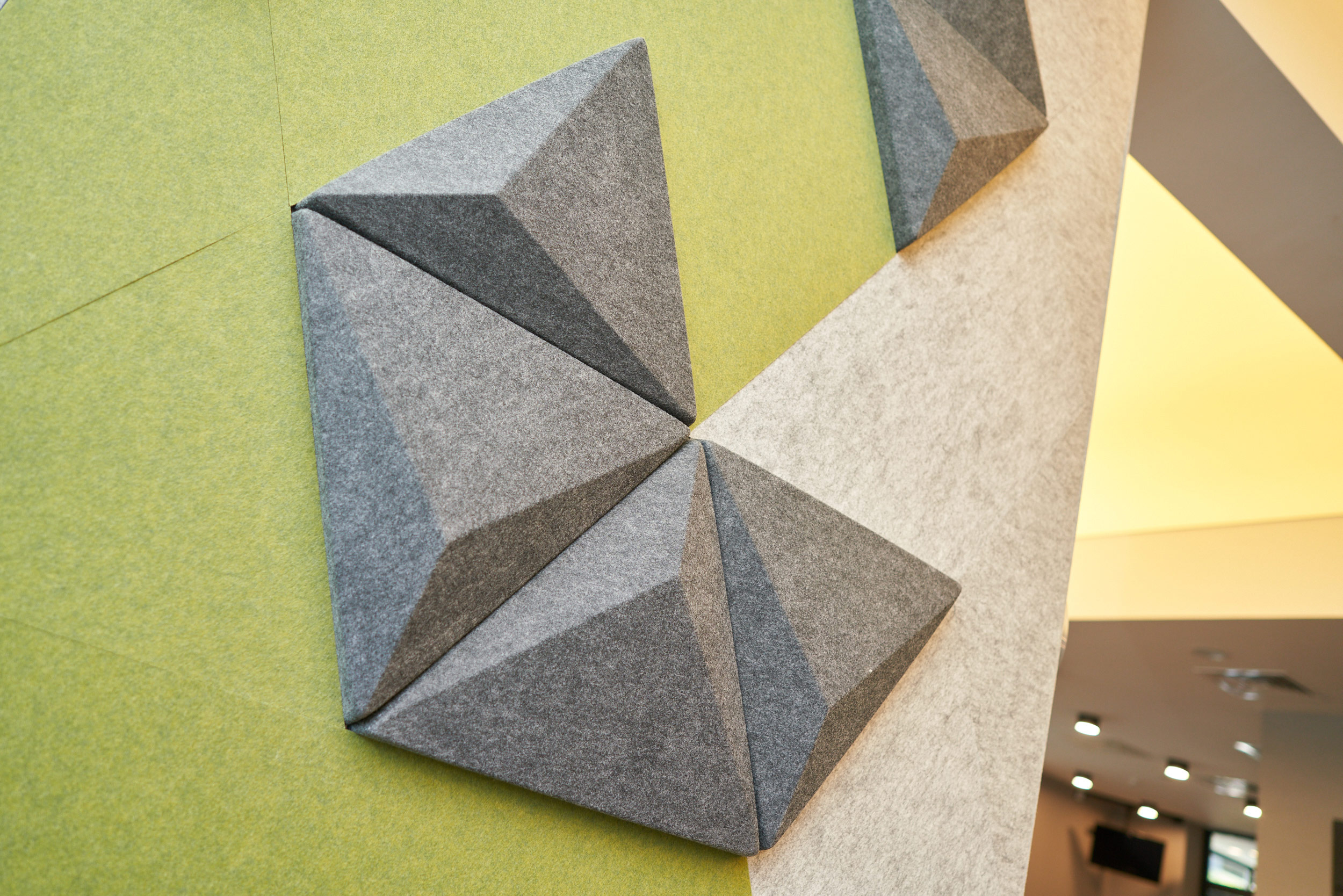

A room can be full of acoustic panels and still sound strange, flat, boxed-in, oddly dead in one corner and boomy in another. Usually the cause is the same: every panel in the room is doing the same job, absorption, when the room actually needed some diffusion too.
Absorption: taking sound energy out of the room
Absorptive materials, foam, mineral wool, PET felt, fabric-wrapped panels, convert sound energy into a small amount of heat as it passes through the material's porous structure. The sound doesn't bounce back into the room, it's genuinely reduced. This is what brings reverberation time down and what most people mean by "acoustic treatment": less sound reflecting around the space, less buildup, a quieter, more controlled room.
Diffusion: scattering sound without removing it
Diffusion works completely differently. A diffuser, typically a textured or geometrically irregular surface, doesn't absorb the sound hitting it, it scatters that energy in many directions instead of reflecting it back as a single, coherent wave. The total sound energy in the room barely changes, but the character of the reflections does: instead of one strong, distinct echo bouncing straight back, you get many weaker, scattered reflections arriving from different angles.
Why an all-absorption room can sound wrong
A room treated purely with absorption, no diffusion at all, can end up feeling acoustically dead or unnaturally flat, particularly for music, performance or any space where some liveliness is part of the intended experience. Recording studios and performance spaces have known this for decades: a control room treated with absorption alone often sounds claustrophobic and fatiguing to listen in for hours, which is why professional studio design almost always combines absorption at reflection points with diffusion elsewhere in the room.
Where each one actually belongs
Absorption does the heavy lifting on reverberation time and speech intelligibility, it's the right tool for open-plan offices, classrooms, and anywhere the goal is simply less noise and a shorter RT60. Diffusion earns its place in rooms where you want to preserve some liveliness while still controlling harsh, distinct echoes, rear walls of auditoriums, control rooms, larger performance spaces, and rooms with parallel hard surfaces prone to flutter echo. Most commercial and residential projects lean heavily towards absorption because the goal is simply a quieter, calmer room, but it's worth knowing diffusion exists before assuming more panels is always the answer to a room that still doesn't sound right.
Common questions
Do I need diffusion in a standard office or classroom? Rarely. Most everyday commercial spaces are better served by absorption alone, diffusion becomes relevant mainly in performance, recording and larger multi-purpose spaces.
Can one panel do both jobs? Hybrid absorber-diffuser panels exist, but a dedicated diffuser and a dedicated absorber each perform their specific job more effectively than a compromise product trying to do both.
Working out which your room needs
See our guide to flutter echo and room geometry or book a free survey to find out whether your space needs absorption, diffusion, or a combination of both.
Related product guides: 3D acoustic panels, acoustic wood panels.
From first survey to final finish
Seven stages, one point of contact. Book a free survey or call +44 1908 880191, and we'll come back to you with the next step.

An acoustician visits the site, or works from your drawings and photos when a visit isn't practical. Either way, the room, its surfaces and how it is used are recorded before any advice is given.

Reverberation, ambient noise and noise transfer are read against what the space is used for. The findings arrive as an AI-assisted acoustic report with recommendations, yours to keep with no obligation to proceed.

Treatment is modelled against a reverberation target, then drawn up with panel positions, fixings and finishes. Nothing moves forward until you have approved the design.

Every quotation comes with the specification behind it, listing products by type, quantity and finish with costs set out line by line. What is quoted is what the design calls for.

Panels, baffles, ceilings and screens come from the manufacturers we work with and are supplied to the approved specification. What arrives on site matches what was designed.

Our installation team fits to the approved drawings, checking positions and fixings as they go. One team supplies and installs the treatment.

Optional paid add-on: after fit-out the space can be measured again and compared with the original survey, so the improvement is measured rather than assumed. Compliance testing is carried out with our testing partner, EMC Acoustics, and the written record goes into your building file.
Stay connected with insights
Get the latest updates from our acousticians