Museum

Visitors hear guides without talking over each other

Reversible fixings chosen to protect listed building fabric

Calmer galleries with less distraction for visitors

Better access for visitors with hearing loss
Acoustic treatment keeps museums and galleries calm and clear
Good treatment fixes this while protecting the original building. Using reversible, freestanding or minimally-fixed absorption, we bring reverberation down enough that visitors can talk normally in front of the work, with fixings chosen to protect original surfaces.
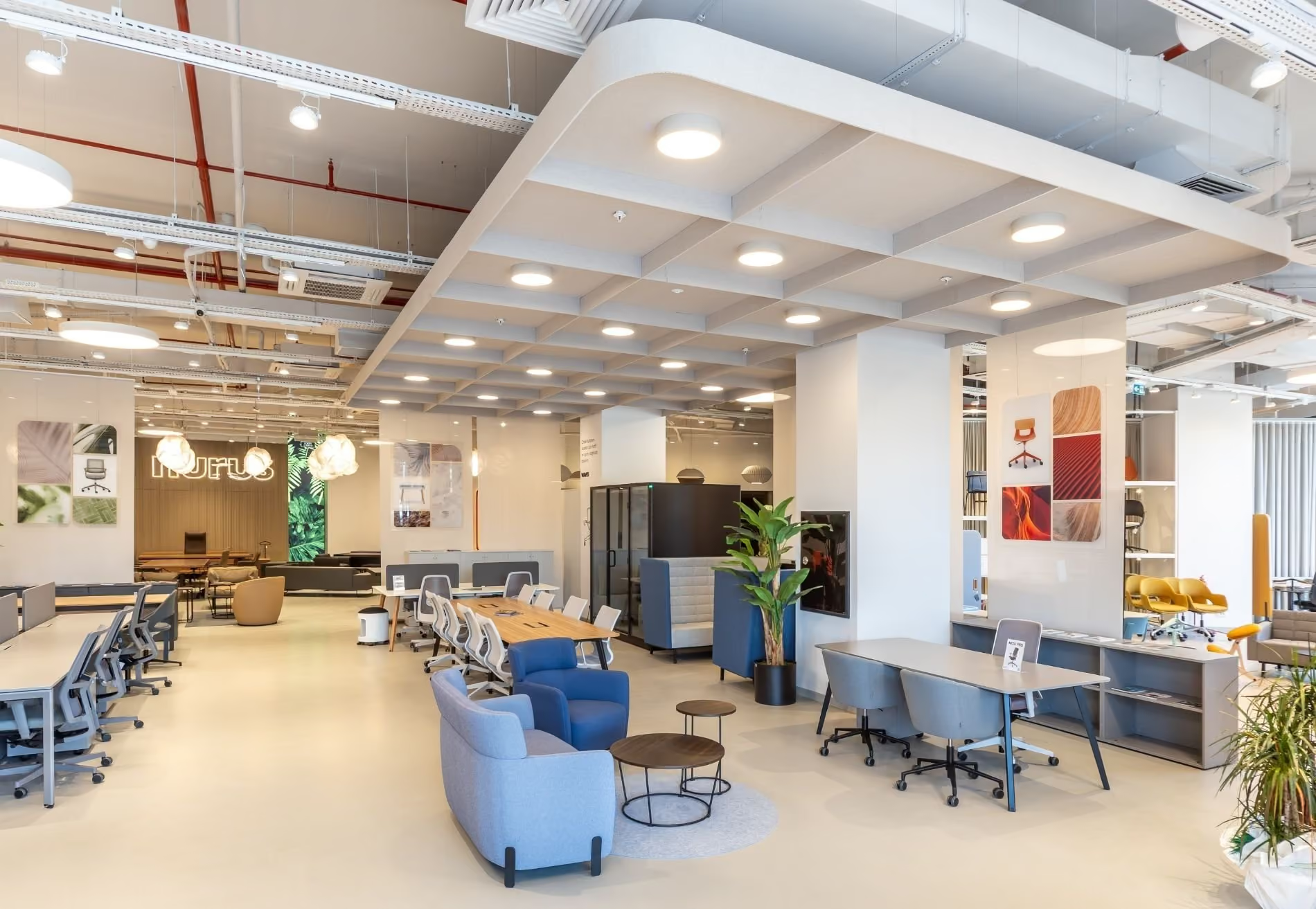
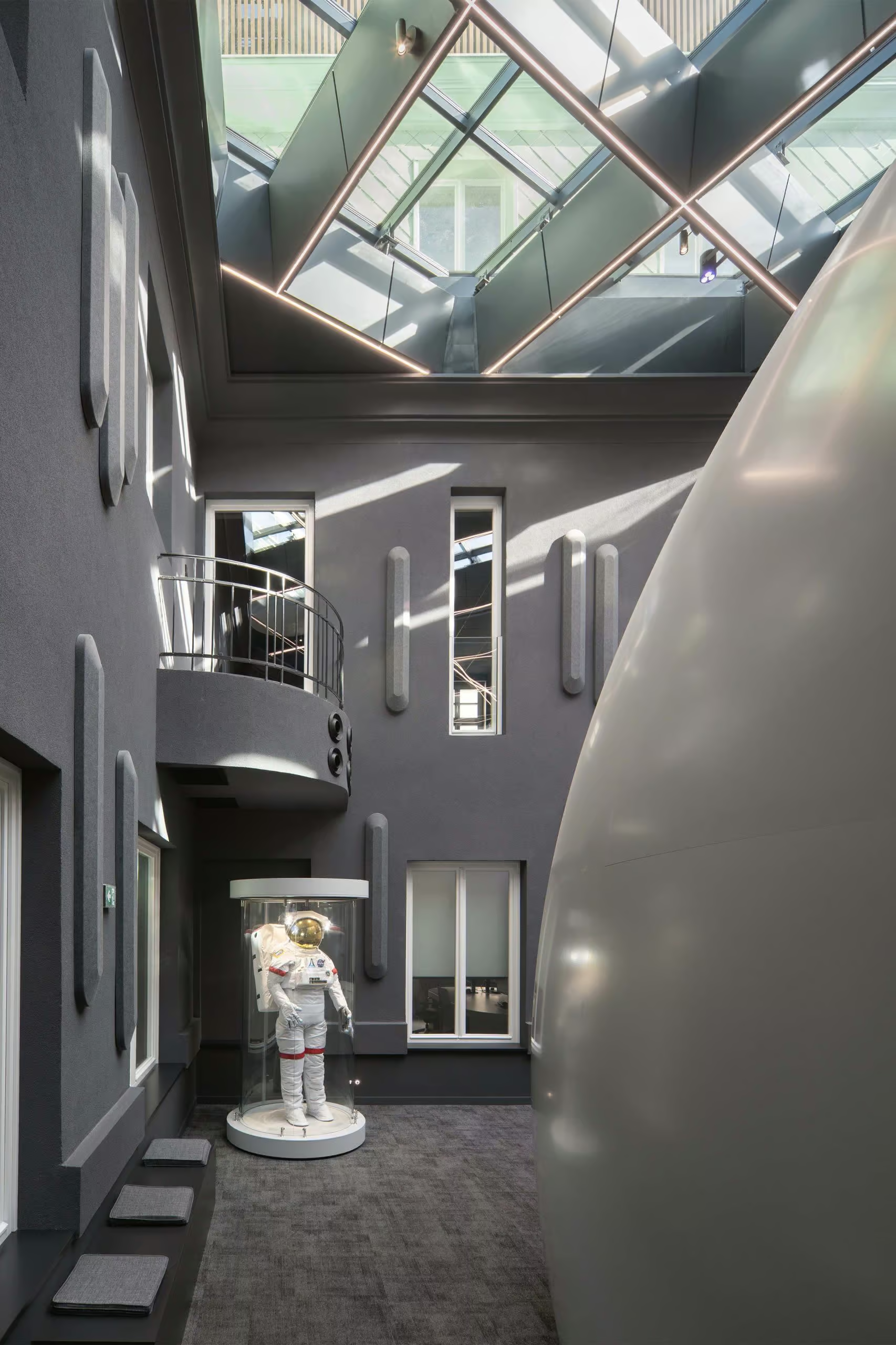
Big rooms, hard floors and glass display cases are what make a gallery feel grand — and what make it echo. Footsteps and conversation bounce around until visitors start talking over each other just to be heard, competing with the exhibits instead of enjoying them. Add a listed building into the mix, and most obvious fixes are off the table before you even start.
Custom acoustic solutions for
Museum

Sound reasons for Acoustic

One contractor, start to finish
Survey, design and installation handled by our own team, and testing carried out with our testing partner, EMC Acoustics. One team stays accountable for the result, from the first site visit to the final sign-off.

Designed to a target
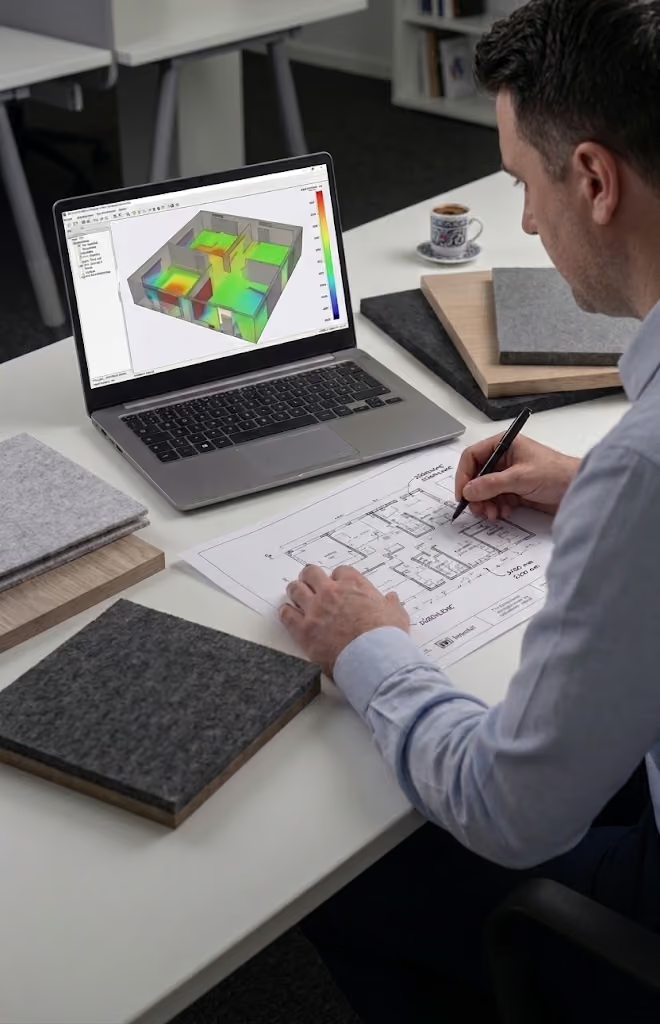
Every space gets an acoustic design modelled to a specific reverberation target, not a standard panel layout. Before-and-after acoustic measurement is available as a paid add-on, so the improvement can be proven, not just felt.

Reversible installation for heritage settings
Hard floors, glass and high ceilings can turn galleries into echo chambers, so visitors raise their voices and guided talks get lost. We add absorption that complements the exhibits, with reversible fixings in line with Historic England's advice on changing heritage assets, so the building is protected and visitors stay focused.

Independent on materials
We source from several manufacturers and are tied to none, so we specify what your space and budget actually need, not what one catalogue stocks.
What We Offer
Museum
Not sure what this space needs? Call us on +44 1908 880191 or book a free survey, and we'll come back to you with the next step.

We assess galleries, atriums and education spaces where voices and footsteps carry, design treatment around your displays, and specify products with samples and data your conservators can test, for example with the Oddy test, before anything goes near collections. Our installation team fits the scheme once approved.

A free site survey. An acoustician assesses the space and how it is used, and you receive a quotation and an AI-assisted acoustic report, with no obligation to go ahead.
Product placement, specifications and drawings your contractor can work from, designed around how the space is used. Free design on qualifying projects.

Send us drawings and photographs and we'll prepare an acoustic proposal with product recommendations and a quotation for supply and installation, free of charge.
Before-and-after acoustic measurement and compliance testing, carried out with our testing partner EMC Acoustics. This is a paid service, available on any project.
Trusted on schools, venues and landmark halls








How we reduce the noise
For most galleries we specify discreet ceiling absorption and, where the building allows it, sculptural or textured wall panels that add visual interest while bringing reverberation down to a level that protects both conversation and any audio exhibits.
One team surveys, designs and installs — nothing gets lost between contractors
Every install is checked against the target spec before we call it done
Not tied to one manufacturer, so the product is chosen for your space, not our stock
Standards, finishes and installation
Your questions about this space, answered.
In most cases, yes. Historic England's approach centres on reversibility, so we specify fixing methods that do not damage original fabric and advise on what is achievable for your specific listing. Consent from the local authority may still be needed, so we check early.
Use discreet ceiling absorption and, where the building allows, textured or sculptural panels that complement the space. The aim is to lower reverberation so visitors can talk at normal volume, without treatment competing with what is on display.
Yes. Custom acoustic solutions are engineered for vaulted, domed and period ceilings that standard panels cannot fit. We survey the geometry and design pieces that follow it, using reversible fixings where the fabric is protected.
Yes. Lower ambient reverberation makes quiet audio-visual and interactive exhibits easier to hear, because sound from one display no longer builds up and masks the next. We specify absorption to protect them.
Often, with phasing. We can plan installation around opening hours or closed days, depending on the space and the fixing method, and protect exhibits and visitor routes throughout. Some work near fragile objects may need a closed day.
Too noisy? Let's talk silence.
Book a FREE site survey, and an acoustician will tell you exactly what your space needs. Rather talk first? Call +44 1908 880191.