Industrial
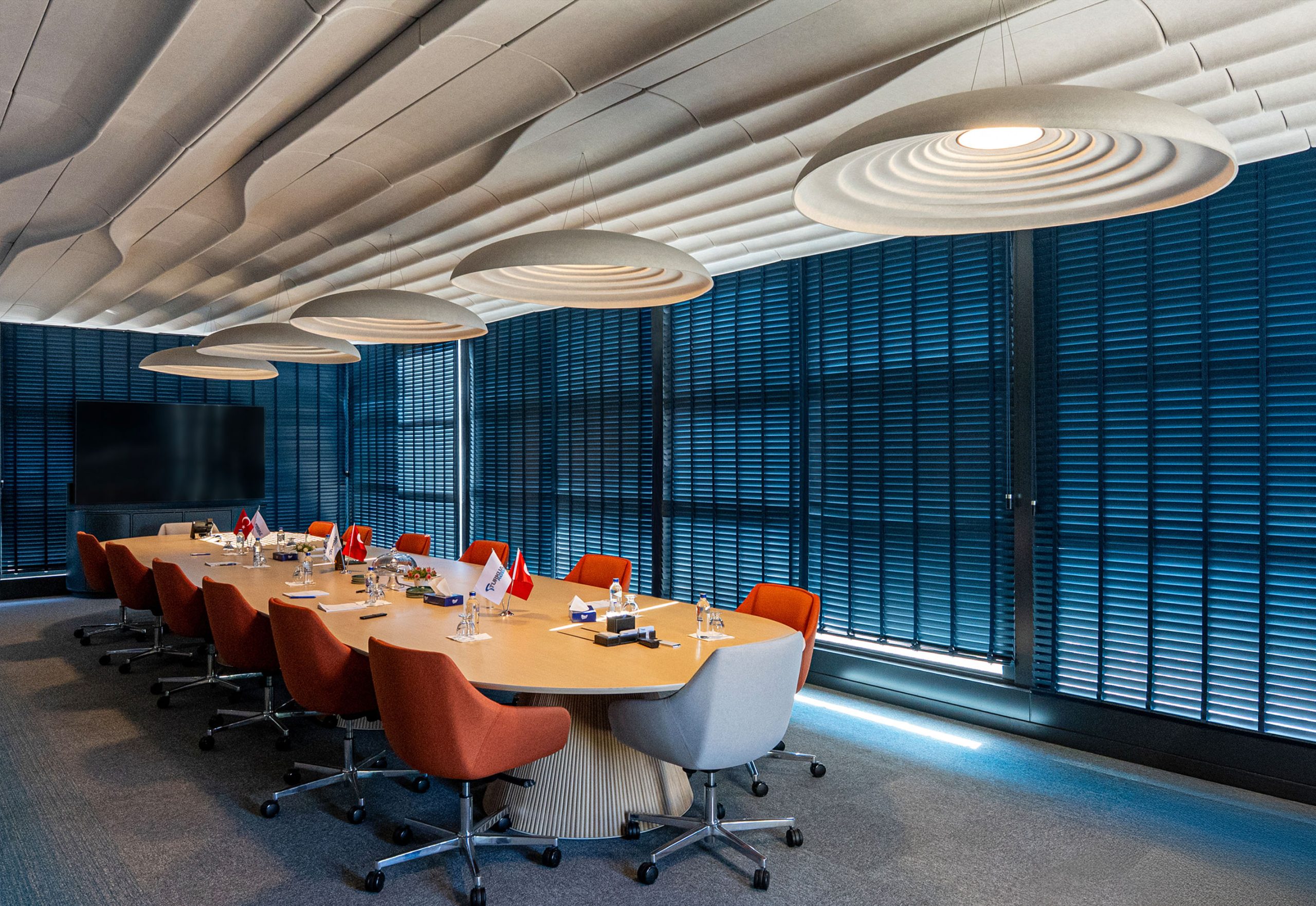

Lower reverberant noise across the production floor

Assessed against the Control of Noise at Work Regulations 2005

Warnings and instructions are easier to hear

An engineering control that comes before hearing protection
In industrial spaces, noise control is a legal duty
Good treatment fixes this at the source, not with earplugs. By absorbing sound with durable, washable materials fitted around your existing plant, you bring exposure down to a safer level without slowing the production line for a single day.
On a production floor, noise isn't background — it's machinery running for hours, next to people who have to be there for a full shift. Push past a certain level and it stops being an annoyance and becomes a legal exposure problem, one that shows up in hearing damage claims years down the line if it's never addressed.
Custom acoustic solutions for
Industrial

Sound reasons for Acoustic

One contractor, start to finish
Survey, design and installation handled by our own team, and testing carried out with our testing partner, EMC Acoustics. One team stays accountable for the result, from the first site visit to the final sign-off.

Designed to a target
Every space gets an acoustic design modelled to a specific reverberation target, not a standard panel layout. Before-and-after acoustic measurement is available as a paid add-on, so the improvement can be proven, not just felt.

Built for the Control of Noise at Work Regulations 2005
Under the Control of Noise at Work Regulations 2005, employers must reduce exposure by engineering and organisational means before relying on hearing protection. Sound absorption is one of those measures: it reduces the reverberant noise that builds up in hard-walled halls. We design it around your plant and your noise assessment.

Independent on materials
We source from several manufacturers and are tied to none, so we specify what your space and budget actually need, not what one catalogue stocks.
What We Offer
Industrial
Not sure what this space needs? Call us on +44 1908 880191 or book a free survey, and we'll come back to you with the next step.

We assess reverberant noise across production and warehouse areas, design absorption for walls and high ceilings, and specify products suited to the space. Our installation team follows your site induction and permit-to-work procedures, and plans high-level work around shutdowns, maintenance windows or quieter shifts.

A free site survey. An acoustician assesses the space and how it is used, and you receive a quotation and an AI-assisted acoustic report, with no obligation to go ahead.
Product placement, specifications and drawings your contractor can work from, designed around how the space is used. Free design on qualifying projects.

Send us drawings and photographs and we'll prepare an acoustic proposal with product recommendations and a quotation for supply and installation, free of charge.
Before-and-after acoustic measurement and compliance testing, carried out with our testing partner EMC Acoustics. This is a paid service, available on any project.
Trusted on schools, venues and landmark halls







How we reduce the noise
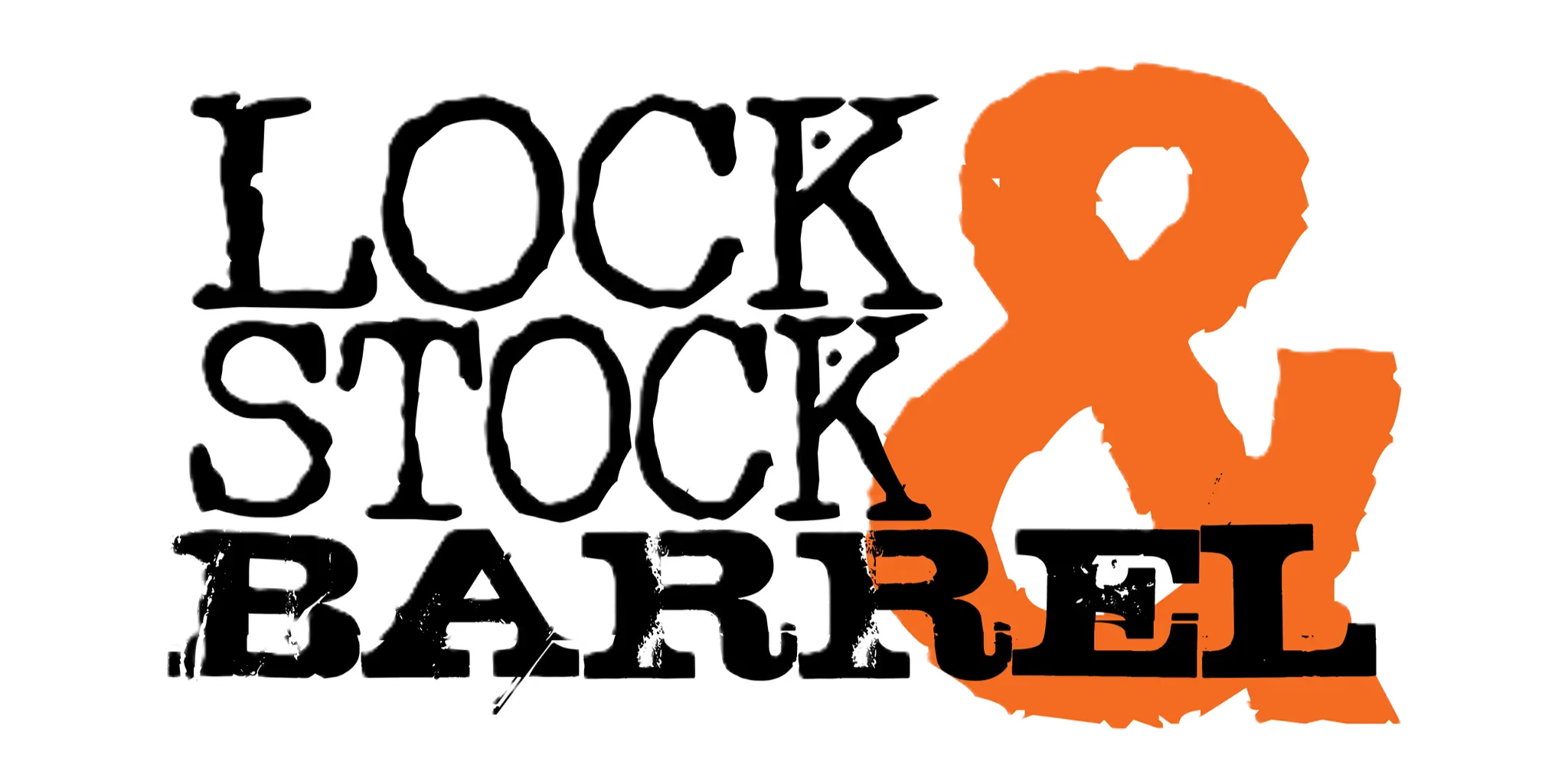
We fit impact- and moisture-resistant acoustic panels and baffles rated for industrial use, positioned to bring overall noise levels down without requiring changes to the production line itself.
One team surveys, designs and installs — nothing gets lost between contractors
Every install is checked against the target spec before we call it done
Not tied to one manufacturer, so the product is chosen for your space, not our stock
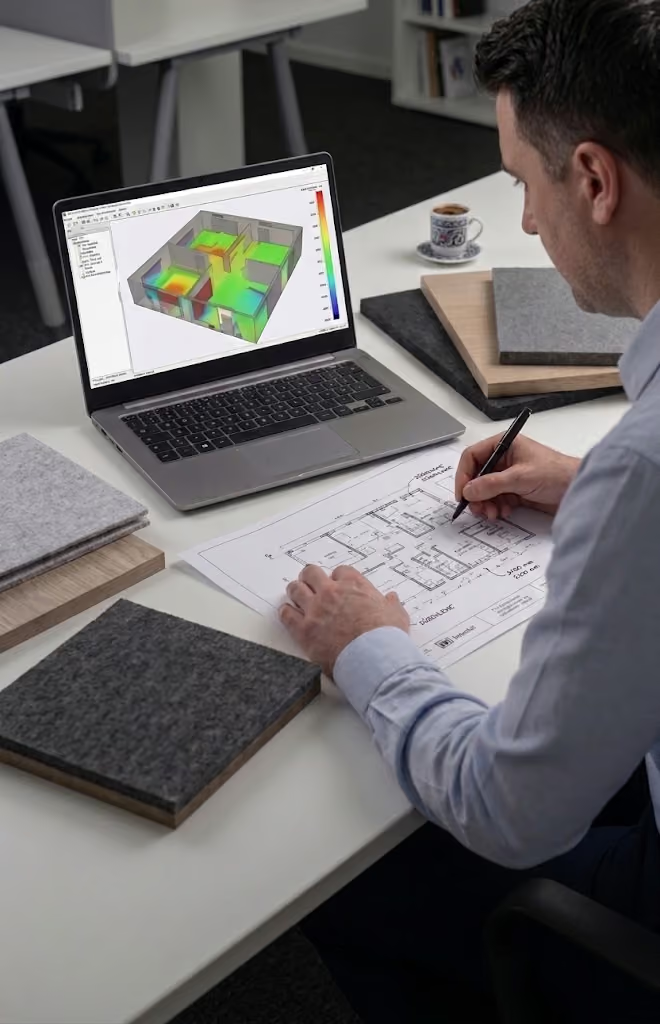
Standards, finishes and installation
Your questions about this space, answered.
Start with an assessment against the thresholds: 80 dB(A) daily exposure triggers assessment and information, 85 dB(A) makes hearing protection mandatory and requires reasonably practicable engineering controls, and 87 dB(A) at the ear must never be exceeded. Absorption lowers room noise, but controlling noise at source comes first.
The employer. Where exposure may reach the lower action value, the employer must assess the risk, using a competent person, and act on the findings. Treatment we specify supports that duty but does not replace a proper noise risk assessment.
Mostly not. Next to a machine, the direct sound dominates, and panels only reduce the reflected noise in the room. Operators at the source need enclosures, damping or source controls, while panels help everyone else on the floor.
Often, for lowering overall room noise, because one treatment helps the whole floor instead of one machine. Enclosures still win for a single very loud source. We compare both against your exposure data before recommending either.
Yes, as a paid add-on. We can measure levels before specifying treatment and again once it is installed, so you have before-and-after data for your records. A full noise-at-work risk assessment is a separate duty and should be carried out by a competent person.
Too noisy? Let's talk silence.
Book a FREE site survey, and an acoustician will tell you exactly what your space needs. Rather talk first? Call +44 1908 880191.