Fabric Acoustic Panels

Separate units, so one damaged panel can be replaced on its own
Core thickness changes which frequencies are absorbed
Panels are made to size; stretched fabric is tensioned on site
The fabric must be acoustically open, or it blocks the core
Fabric Acoustic Panels
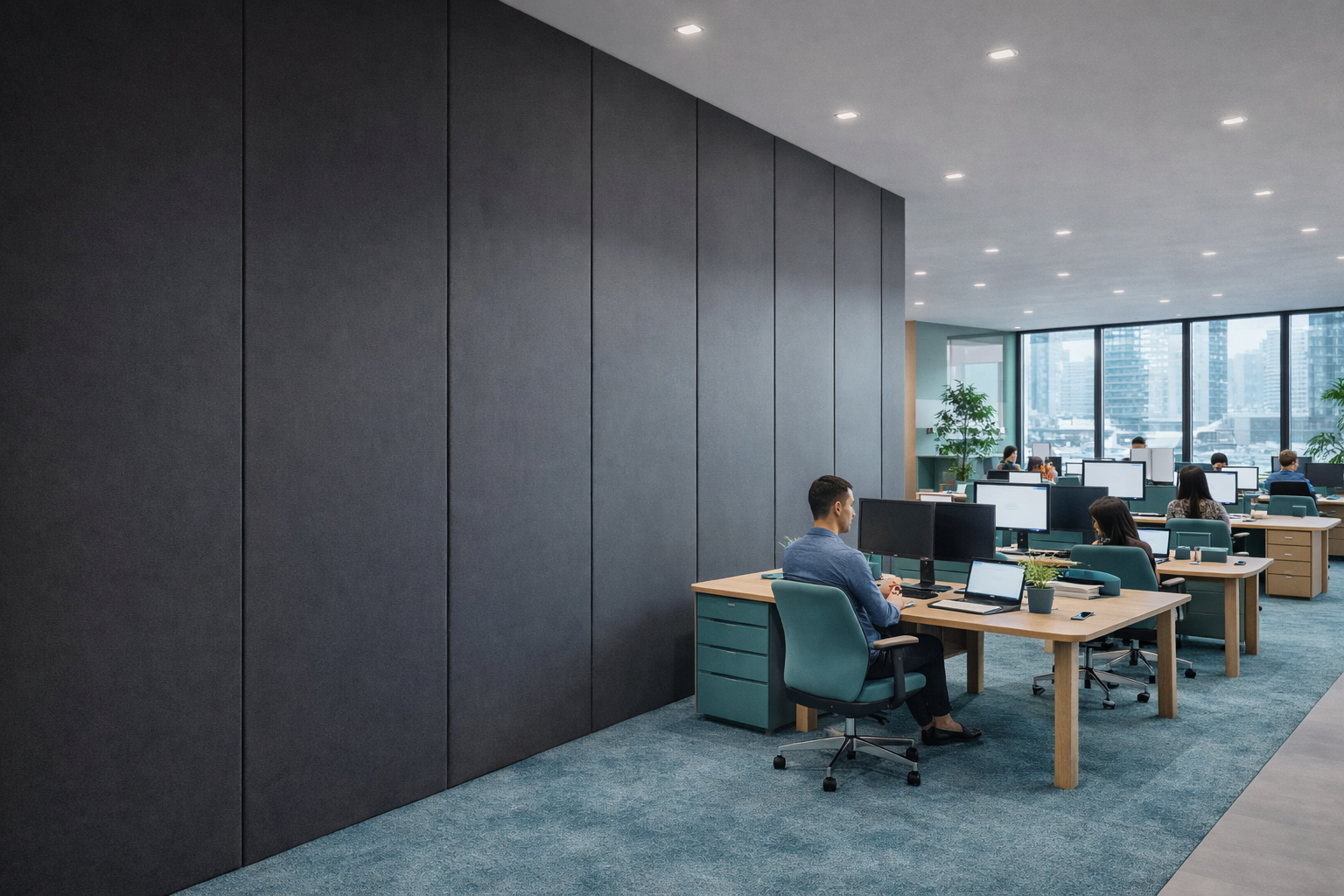
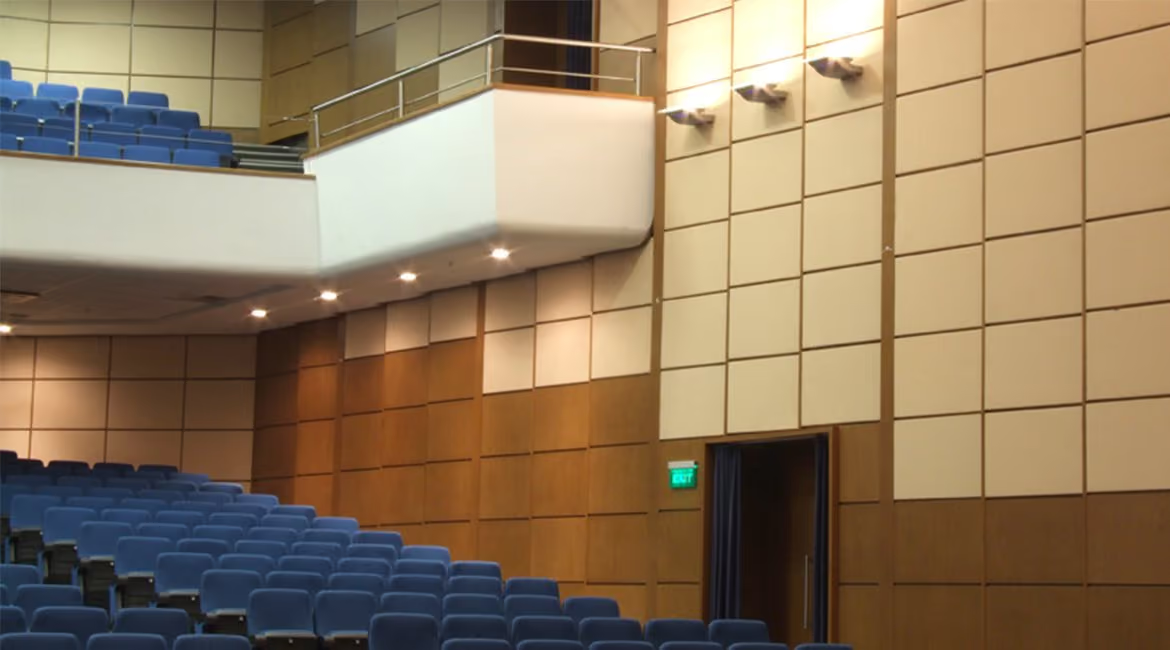
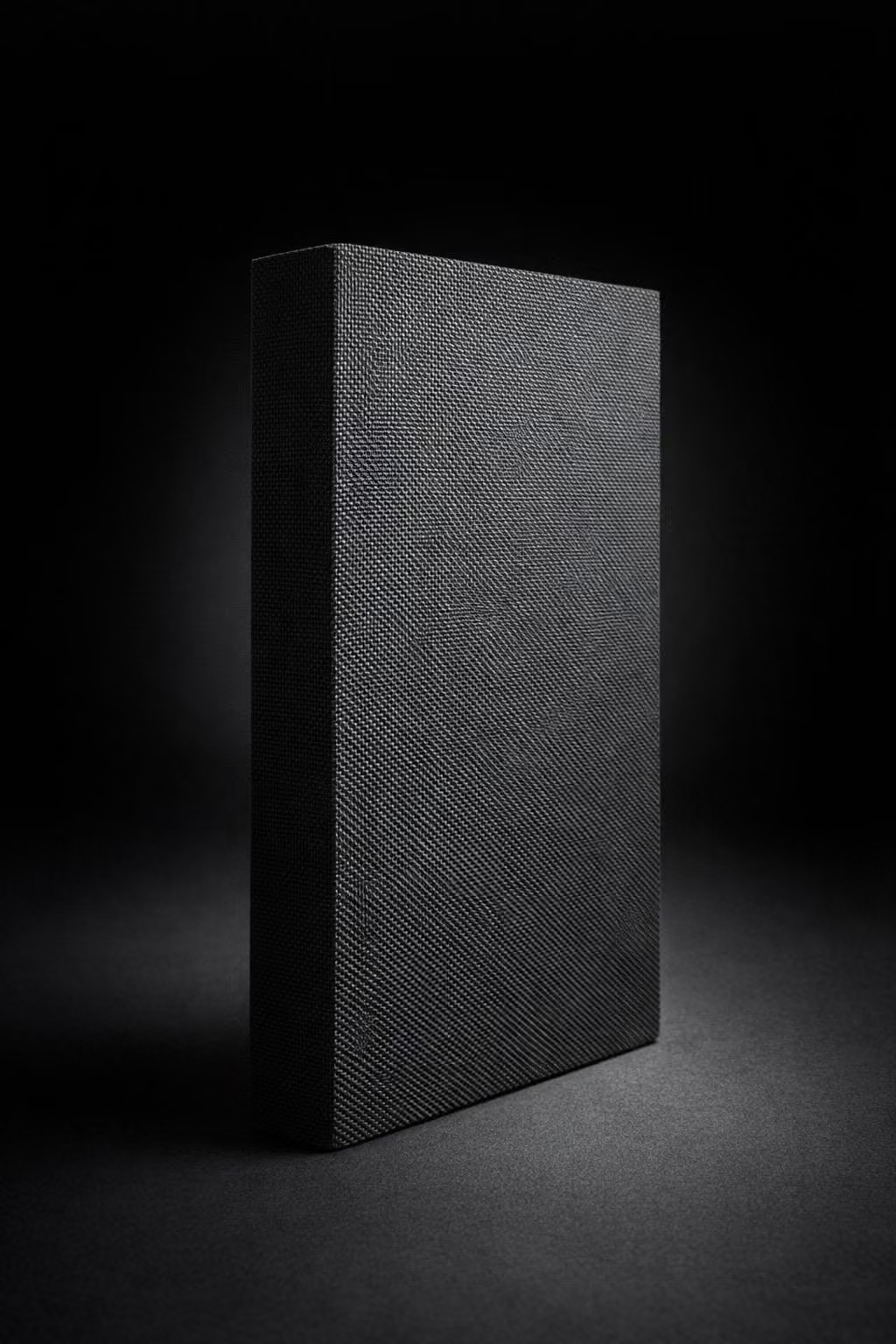
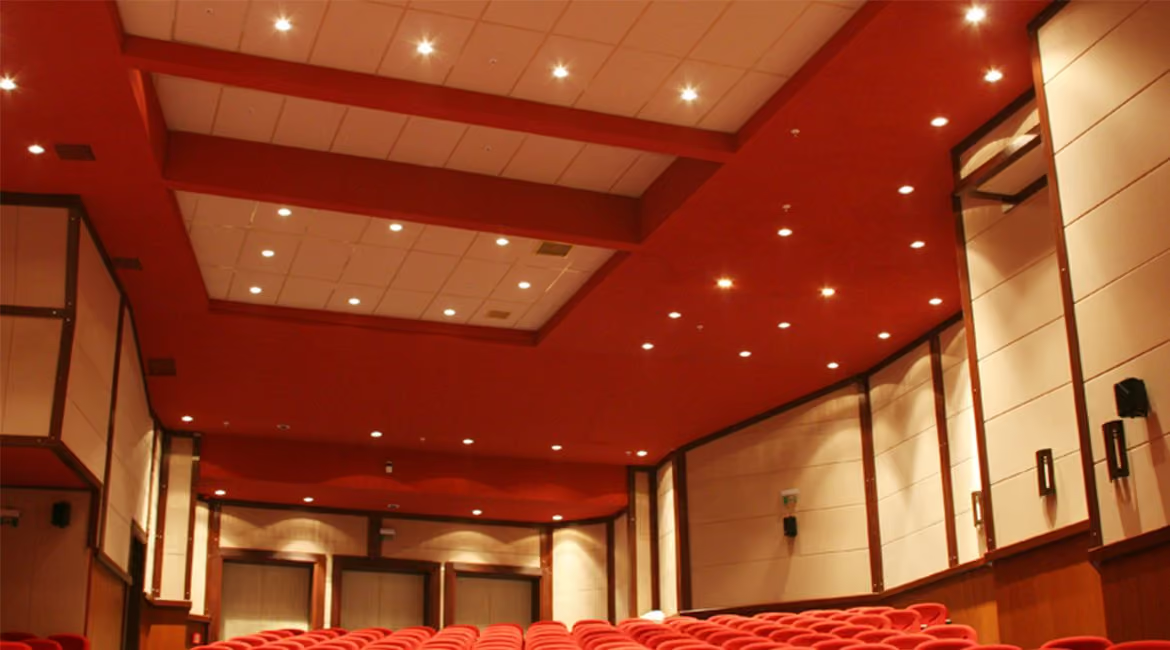
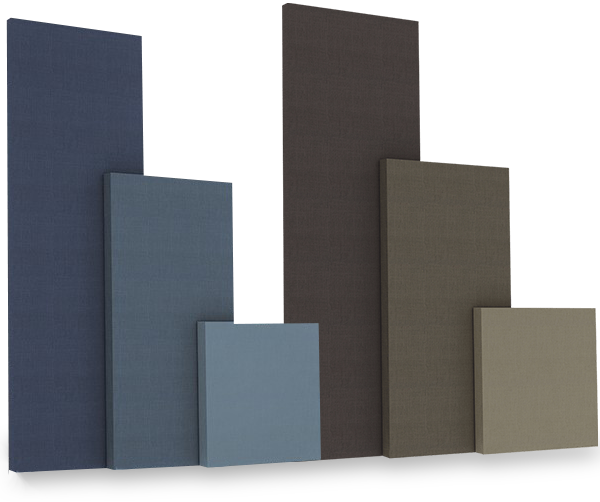
Fabric acoustic panels have an absorbent core, usually mineral wool, glass wool or PET felt, wrapped or framed in fabric. Made to size in a workshop and fixed to walls or ceilings, they absorb sound, shortening echo and improving speech clarity in meeting rooms, classrooms, offices and halls.
Unlike Stretched Fabric, which is tensioned across a track on site, panels are separate units, so a regular layout and easy replacement suit them. We source from several manufacturers and match core, thickness and fabric to your room, then supply and install across the UK.
Sound absorption
A mineral wool, glass wool or PET core absorbs sound through the fabric.
Design flexibility
Fabric, colour, edge detail and panel size can be matched to the interior.
Fabric Acoustic Panels
Explore more acoustic products

From first survey to final finish
Seven stages, one point of contact. Book a free survey or call +44 1908 880191, and we'll come back to you with the next step.

An acoustician visits the site, or works from your drawings and photos when a visit isn't practical. Either way, the room, its surfaces and how it is used are recorded before any advice is given.

Reverberation, ambient noise and noise transfer are read against what the space is used for. The findings arrive as an AI-assisted acoustic report with recommendations, yours to keep with no obligation to proceed.

Treatment is modelled against a reverberation target, then drawn up with panel positions, fixings and finishes. Nothing moves forward until you have approved the design.

Every quotation comes with the specification behind it, listing products by type, quantity and finish with costs set out line by line. What is quoted is what the design calls for.

Panels, baffles, ceilings and screens come from the manufacturers we work with and are supplied to the approved specification. What arrives on site matches what was designed.

Our installation team fits to the approved drawings, checking positions and fixings as they go. One team supplies and installs the treatment.

Optional paid add-on: after fit-out the space can be measured again and compared with the original survey, so the improvement is measured rather than assumed. Compliance testing is carried out with our testing partner, EMC Acoustics, and the written record goes into your building file.
Trusted on schools, venues and landmark halls







Specification, performance and installation
Your product questions, answered.
Fabric acoustic panels are finished units: a core wrapped or framed in fabric, made to size and fixed to the wall or ceiling. Stretched fabric is tensioned across a track on site, giving one continuous surface with few visible joints. The acoustic core can be similar, so the difference is mainly finish, scale and how the work is done.
Usually an absorbent core, such as mineral wool, glass wool or PET felt, with a fabric face. Some have a rigid frame or a wrapped edge. The core does the absorbing and the fabric gives the finish. We check the fabric lets sound through, because a dense or coated fabric reduces the performance.
It depends on the sound you need to absorb. Thicker cores absorb lower frequencies better, and a gap behind the panel helps too. For speech in offices and classrooms, standard thicknesses usually suit. We set thickness and layout against the room's target at survey, not by rule of thumb.
Yes, as suspended ceiling panels or as clouds fitted flat under a ceiling. Weight and fixings matter, so we check the structure at survey. If a flush tile ceiling is what you need, see Acoustic Ceiling Tiles.
Yes, they are common in both. Check the fire rating, the cleaning guidance and the durability of the fabric for the room. In schools we also specify against the reverberation targets in BB93. Offices can be specified against BS ISO 22955:2021. We confirm which standard applies at survey.
Too noisy? Let's talk silence.
Book a FREE site survey, and an acoustician will tell you exactly what your space needs. Rather talk first? Call +44 1908 880191.