
Decibels Explained: Why 10 dB More Sounds Twice as Loud
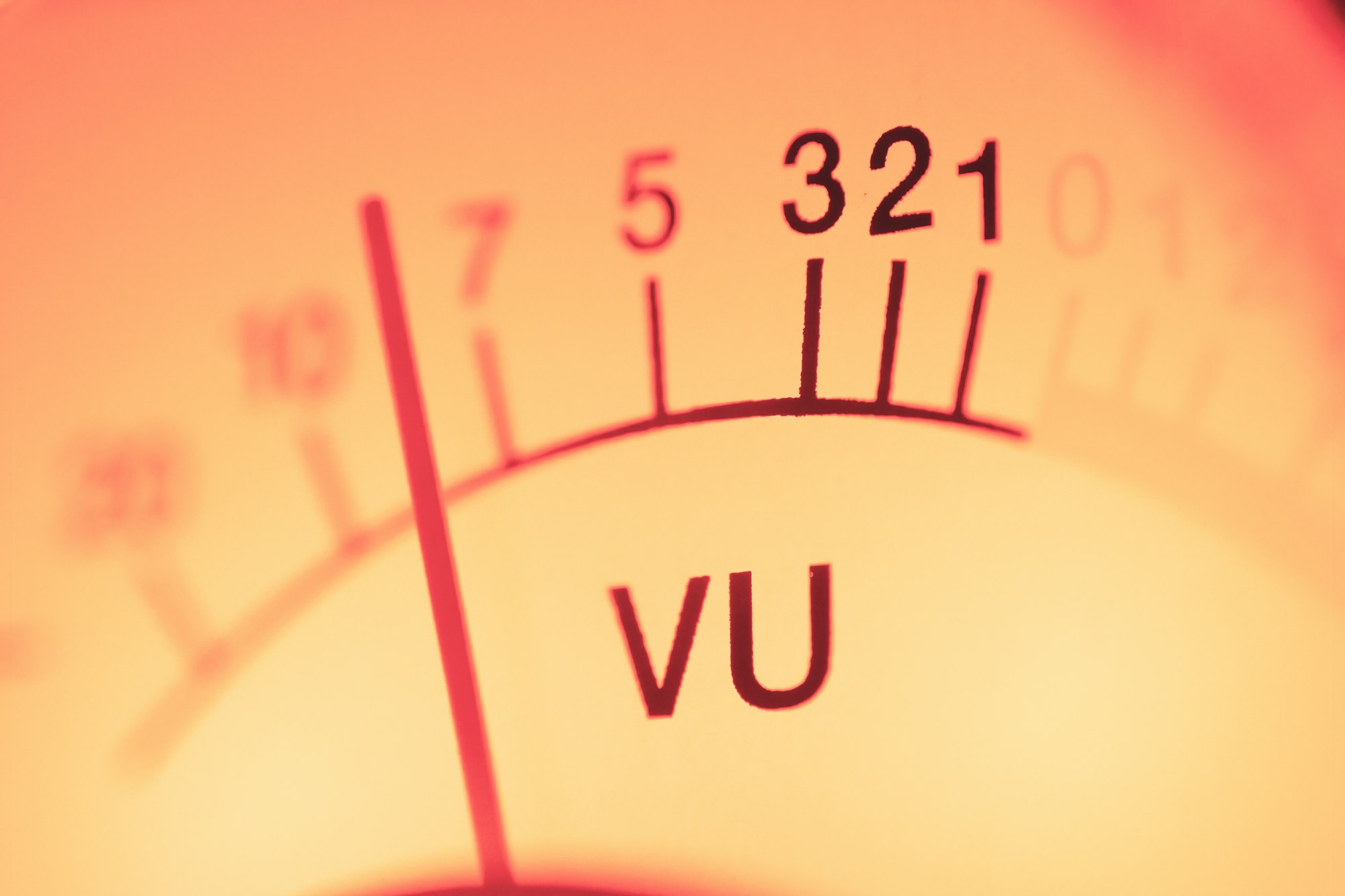

Someone tells you a new extraction fan is "only 3 dB louder" than the old one, and it sounds like a rounding error. It isn't, and understanding why is the single most useful piece of acoustic literacy for anyone making a treatment or equipment decision.
Why decibels are logarithmic in the first place
The human ear handles an enormous range of sound pressure, from the quietest audible whisper to a jet engine at close range, a ratio on the order of a trillion to one. A linear scale covering that range would be unworkable, so sound level is expressed on a logarithmic scale instead, compressing that vast range into a workable span of roughly 0 to 140 dB. The trade-off is that decibels don't behave the way most people intuitively expect numbers to behave.
The 3 dB rule: doubling of energy
Every 3 dB increase represents a doubling of actual sound energy. Two identical machines running together produce roughly 3 dB more than one running alone, not double the dB figure, because you're combining energy logarithmically, not adding decibels arithmetically. This catches people out constantly: adding a second, identical source of noise to a room raises the level by only 3 dB, even though the actual sound power has doubled.
The 10 dB rule: doubling of perceived loudness
Perceived loudness is a different measurement from raw sound energy, and it takes roughly a 10 dB increase for a sound to be perceived as twice as loud by the human ear. This is the figure that matters when you're deciding whether a change is worth the cost of treatment: reducing background noise by 3 dB is real and measurable, but reducing it by 10 dB is the difference a client will genuinely notice and describe as "twice as quiet."
Why this matters for specifying treatment
This logarithmic relationship explains why acoustic treatment often has diminishing returns as you add more of it. The first set of panels in an untreated room typically delivers a large, easily noticeable reduction. Doubling that treatment doesn't double the improvement, because you're now chasing a smaller remaining dB reduction for the same or greater cost. Understanding this stops a client from expecting a linear "more panels equals proportionally quieter" outcome, and helps set a realistic, achievable target from the outset.
dB(A) weighting: why you'll see an "A" after most figures
Most workplace and environmental noise figures are quoted in dB(A), which applies a weighting curve that approximates how the human ear's sensitivity varies across frequency, we're less sensitive to very low and very high frequencies than to the mid-range where speech sits. The Control of Noise at Work Regulations 2005's 80, 85 and 87 dB(A) thresholds are all A-weighted for exactly this reason: they're meant to reflect what actually damages human hearing, not just raw physical sound pressure.
Common questions
Is a 6 dB reduction significant? It's a genuine, measurable improvement, roughly a 75% reduction in sound energy, though it sits below the 10 dB threshold most people would describe as "half as loud."
Why does a room with two people talking sound so much louder than one? Doubling the number of equal speech sources adds about 3 dB, but overlapping speech also increases perceived loudness through masking and cognitive load, which is why busy rooms feel disproportionately harder to work in.
Getting a real assessment, not an estimate
See our guide to reverberation time and RT60 or book a free survey to have your space assessed rather than guessed at.
Related product guides: acoustic ceilings: tiles, baffles or rafts.
From first survey to final finish
Seven stages, one point of contact. Book a free survey or call +44 1908 880191, and we'll come back to you with the next step.

An acoustician visits the site, or works from your drawings and photos when a visit isn't practical. Either way, the room, its surfaces and how it is used are recorded before any advice is given.

Reverberation, ambient noise and noise transfer are read against what the space is used for. The findings arrive as an AI-assisted acoustic report with recommendations, yours to keep with no obligation to proceed.

Treatment is modelled against a reverberation target, then drawn up with panel positions, fixings and finishes. Nothing moves forward until you have approved the design.

Every quotation comes with the specification behind it, listing products by type, quantity and finish with costs set out line by line. What is quoted is what the design calls for.

Panels, baffles, ceilings and screens come from the manufacturers we work with and are supplied to the approved specification. What arrives on site matches what was designed.

Our installation team fits to the approved drawings, checking positions and fixings as they go. One team supplies and installs the treatment.

Optional paid add-on: after fit-out the space can be measured again and compared with the original survey, so the improvement is measured rather than assumed. Compliance testing is carried out with our testing partner, EMC Acoustics, and the written record goes into your building file.
Stay connected with insights
Get the latest updates from our acousticians