Stretched Fabric

Tensioned over an absorbing core, so it reads as a wall, not a product
Large areas with no visible joints or fixings
The infill decides performance, not the fabric
A fabric that's too dense blocks the absorption behind it
Stretched Fabric
Stretched fabric systems tension a fabric face over an acoustic core in a perimeter frame. They give large walls and ceilings a seamless, joint-free finish while the core absorbs sound, so auditoriums, cinemas, boardrooms and retail spaces are treated without visible fixings.
The core is typically mineral wool or PET felt. The fabric can carry printed graphics or branding and can be removed and re-tensioned later without replacing the core. We specify frame, infill and fabric to your brief, then supply and install across the UK.
Sound absorption
Tensioned fabric over a mineral wool or PET core.
Design flexibility
Joint-free walls for printed graphics; fabric can be re-tensioned.
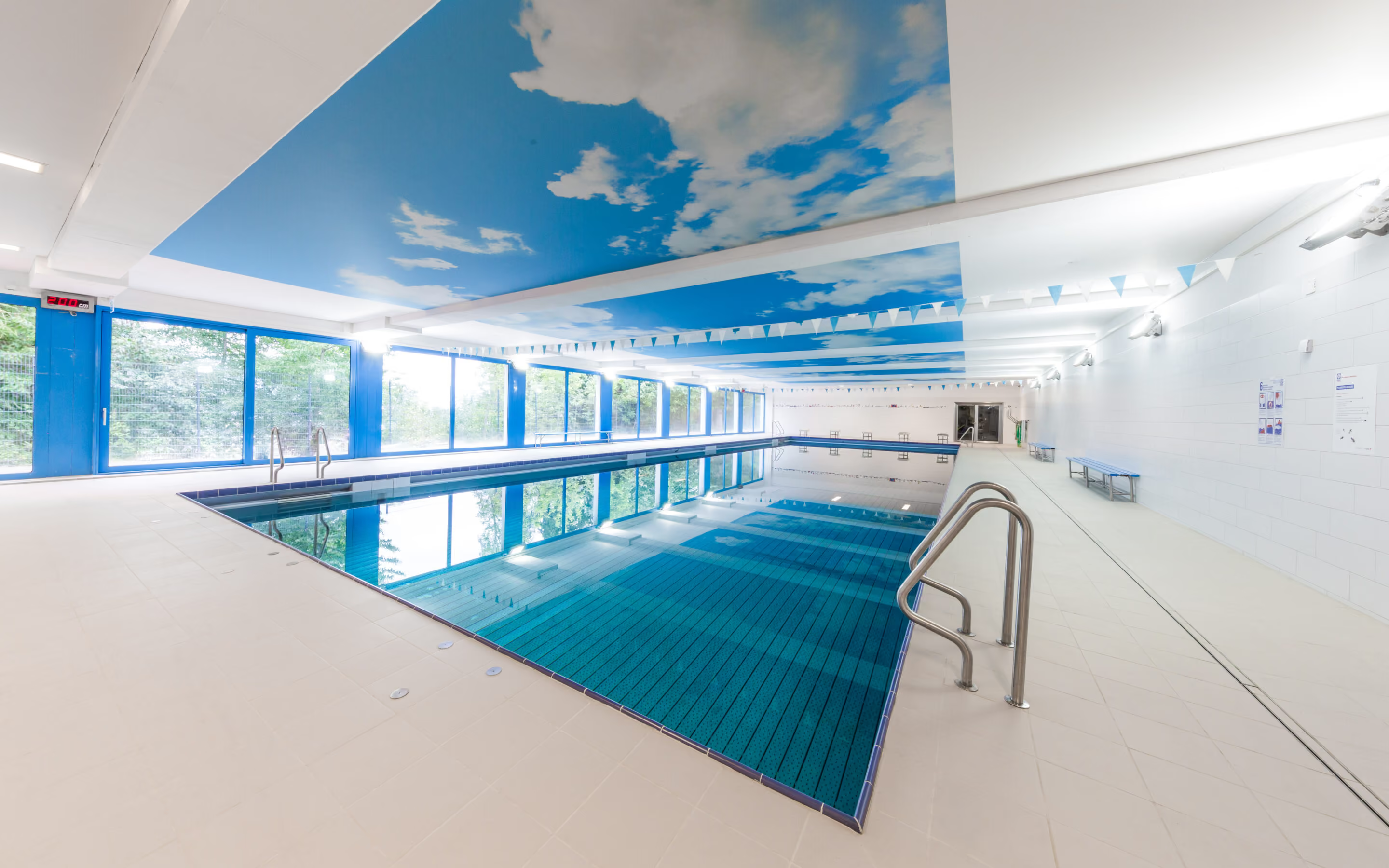
Stretched Fabric
Explore more acoustic products
From first survey to final finish
Seven stages, one point of contact. Book a free survey or call +44 1908 880191, and we'll come back to you with the next step.

An acoustician visits the site, or works from your drawings and photos when a visit isn't practical. Either way, the room, its surfaces and how it is used are recorded before any advice is given.

Reverberation, ambient noise and noise transfer are read against what the space is used for. The findings arrive as an AI-assisted acoustic report with recommendations, yours to keep with no obligation to proceed.

Treatment is modelled against a reverberation target, then drawn up with panel positions, fixings and finishes. Nothing moves forward until you have approved the design.

Every quotation comes with the specification behind it, listing products by type, quantity and finish with costs set out line by line. What is quoted is what the design calls for.

Panels, baffles, ceilings and screens come from the manufacturers we work with and are supplied to the approved specification. What arrives on site matches what was designed.

Our installation team fits to the approved drawings, checking positions and fixings as they go. One team supplies and installs the treatment.

Optional paid add-on: after fit-out the space can be measured again and compared with the original survey, so the improvement is measured rather than assumed. Compliance testing is carried out with our testing partner, EMC Acoustics, and the written record goes into your building file.
Trusted on schools, venues and landmark halls








Specification, performance and installation
Your product questions, answered.
Stretched fabric is tensioned across an aluminium frame as one continuous sheet, so large walls have no visible joints. Fabric-wrapped panels are separate units with visible edges and gaps. The acoustic core behind can be the same, so performance is similar and the real difference is finish and scale.
Yes, and that is a main advantage. The fabric is held by tension, so it can be lifted out, replaced or re-printed without disturbing the frame or the absorbent core behind. It suits spaces that update branding or artwork, such as showrooms, receptions and auditoriums.
Yes. Printing on acoustically open fabric is common in auditoriums, retail and reception areas. The fabric must let sound through to the absorber, so we check that the printed fabric stays acoustically transparent, and we proof colours and resolution before production starts.
In most cases, yes, although the frame must be specified for the geometry. Gentle curves are usually straightforward, while tighter or compound curves need more design work. We confirm feasibility at design stage from your drawings or a site visit.
Similarly, because the same mineral wool or PET infill sits behind the fabric. Performance depends mainly on the infill and its thickness, not the fabric, provided the fabric is acoustically open. A dense or coated fabric will reduce absorption, so we check the fabric as well as the core.
Too noisy? Let's talk silence.
Book a FREE site survey, and an acoustician will tell you exactly what your space needs. Rather talk first? Call +44 1908 880191.